
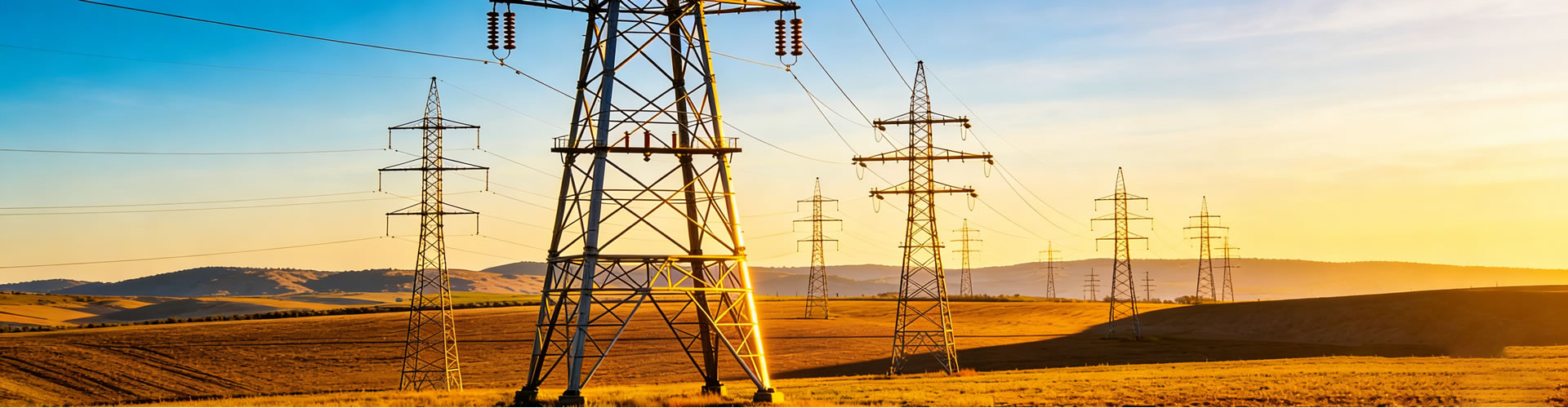
An angle steel tower is an industrial tower structure constructed from galvanized angle steel. Its main body comprises tower legs formed by four sets of vertically intersecting galvanized angle steel, with grid gaps formed between adjacent angle sections. The tower is fixed to the ground via foundation base plates and anchor bolts, and adopts a trapezoidal base frame and gravity balls to form a gravity balancing system. In power transmission, angle steel towers represent a type of steel tower used in transmission line projects.
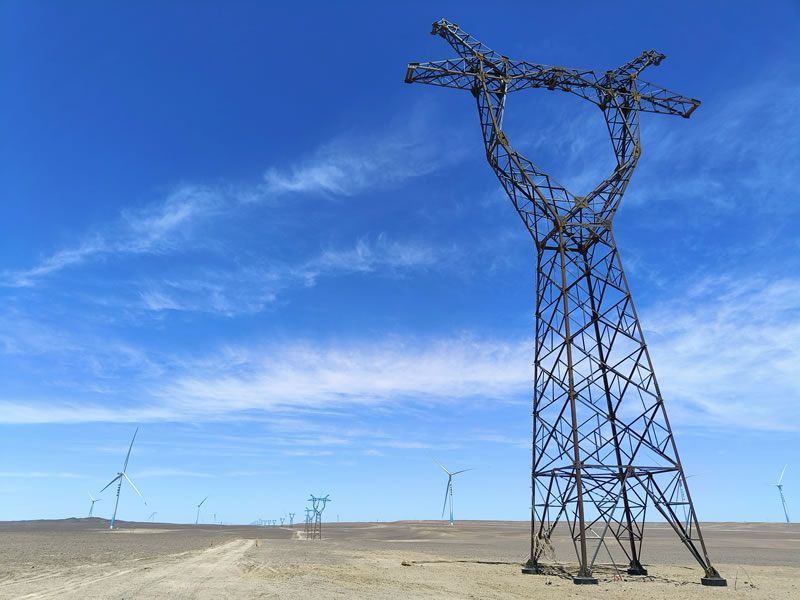
A lattice steel power tower made of weathering steel, customized specifically for the Gobi environment in Hami characterized by extreme drought, strong winds and large temperature differences. Its core advantages include galvanizing-free treatment, self-corrosion resistance, strong wind resistance and tolerance to extreme temperature variations. It serves as the main tower type for UHV and high-voltage transmission lines in the Xinjiang Power Transmission Outbound Project.
Maintenance-free for full life cycle: 30–50 years free of painting and zinc replenishment in Gobi unmanned regions.
Wind and sand erosion resistance:The passivation film exhibits excellent wear resistance, superior to galvanized coatings that are prone to failure under sand erosion.
Temperature variation resistance:Adapts to extreme temperature range of -40℃ to 60℃, free from cracking and embrittlement.

Contact: Zoe Tang
Mob:+86-13861505969
Tel:+86-510-87846156、+86-510-87844156
Fax:+86-510-87843528
Email:hggg@hg-steelpole.com
Add:Wanshi Industrial Zone Yixing City, Jiangsu province
Website:www.hg-steelpole.com


Contact: Zoe Tang
Mob:+86-13861505969
Tel:+86-510-87846156、+86-510-87844156
Fax:+86-510-87843528
Email:hggg@hg-steelpole.com
Website:www.hg-steelpole.com
Add:Wanshi Industrial Zone Yixing City, Jiangsu province